
What is SynGAP syndrome?
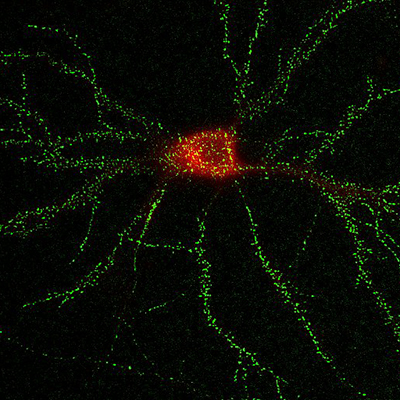
Co-applicants Michael Courtney and Lili Li of the Neuronal Signalling Lab at Turku Bioscience have been awarded a grant from the SynGAP Research Fund (SRF) and Leon and friends e.V. to study targetable defects of SynGAP1 protein variants. Both SRF US & EU are funding this effort.
SynGAP syndrome, a non-syndromic intellectual disability caused by de novo mutation of one of the two copies of the SynGAP1 gene, is heavily underdiagnosed. The number of identified cases currently doubles every two years, but still falls well short of the estimated prevalence of 60 per 100000 (1). Even though there are few known cases, patient advocacy is so well organised that pharma entities already started to develop therapeutic approaches. Nonsense mutations, resulting in reduced levels of functional full-length protein, likely explains most of the diagnosed SynGAP cases, and therapies being developed aim to increase the endogenous protein level. However, some known cases, and possibly the majority of currently undiagnosed cases (1), are caused by missense mutations that each alter just one amino acid. The impacts these changes have on the protein, and on the cells expressing the protein, are unknown. Emerging therapies that increase expression would, in these cases, generate more missense protein alongside the wild-type protein. The consequences of this are not only unknown but could even be harmful. For this reason, the funded project sets out to establish new methods to better define how missense variants are defective and whether increasing their levels have negative effects. If this is the case, novel therapeutic approaches will be required. The more complete understanding of the functional deficits of SynGAP1 variants that this project aims to achieve is the first step in developing these new therapies.
SynGAP Research Fund and Leon and friends e.V. are public charities that aim to improve the quality of life of SynGAP1 patients. The funded project involves collaboration with the laboratories of Prof. Olli Pentikäinen and Dr. Otto Kauko at the University of Turku.
- López-Rivera JA, Pérez-Palma E, Symonds J, Lindy AS, McKnight DA, Leu C, Zuberi S, Brunklaus A, Møller RS, Lal D. A catalogue of new incidence estimates of monogenic neurodevelopmental disorders caused by de novo variants. Brain. 2020 Apr 1;143(4):1099-1105. doi: 10.1093/brain/awaa051. PMID: 32168371; PMCID: PMC7174049.
The writer is Senior Research Fellow and PI of Neuronal Signalling Lab Michael Courtney
Recent Posts
- Frontiers of Science seminars are starting this weekAutumn 2026 Frontiers of Science seminars start this week. Come for a coffee and sandwich Read moreOctober 5, 2026
- Meet our SAB over lunch!Turku Bioscience and BioCity Turku Scientific Advisory Board (SAB) is visiting Turku next week, and Read moreSeptember 16, 2026
- Dissertation Defence: Eleftheria MaranouMSc Eleftheria Maranou, from affiliated MIORG group, succesfully defended the dissertation in Immunology titled “The Achilles’ heel of Read moreSeptember 1, 2026
- Researchers discover molecular mechanism that helps aggressive colorectal cancer to spreadResearchers from the University of Turku in Finland, Turku Bioscience Centre and Gustave Roussy Institute Read moreAugust 25, 2026
- The Novo Nordisk Foundation has awarded funding of approximately one million euros to a research project led by Professor Jukka WestermarckThe Novo Nordisk Foundation has awarded funding of approximately one million euros to a research Read moreAugust 21, 2026
- The Jane and Aatos Erkko Foundation has granted nearly €1 million to support research led by Professor Jukka Westermarck993 000 € was granted to a research project led by our Group Leader Professor Jukka Read moreApril 2, 2026