
Dissertation Defence: Eleftheria Maranou
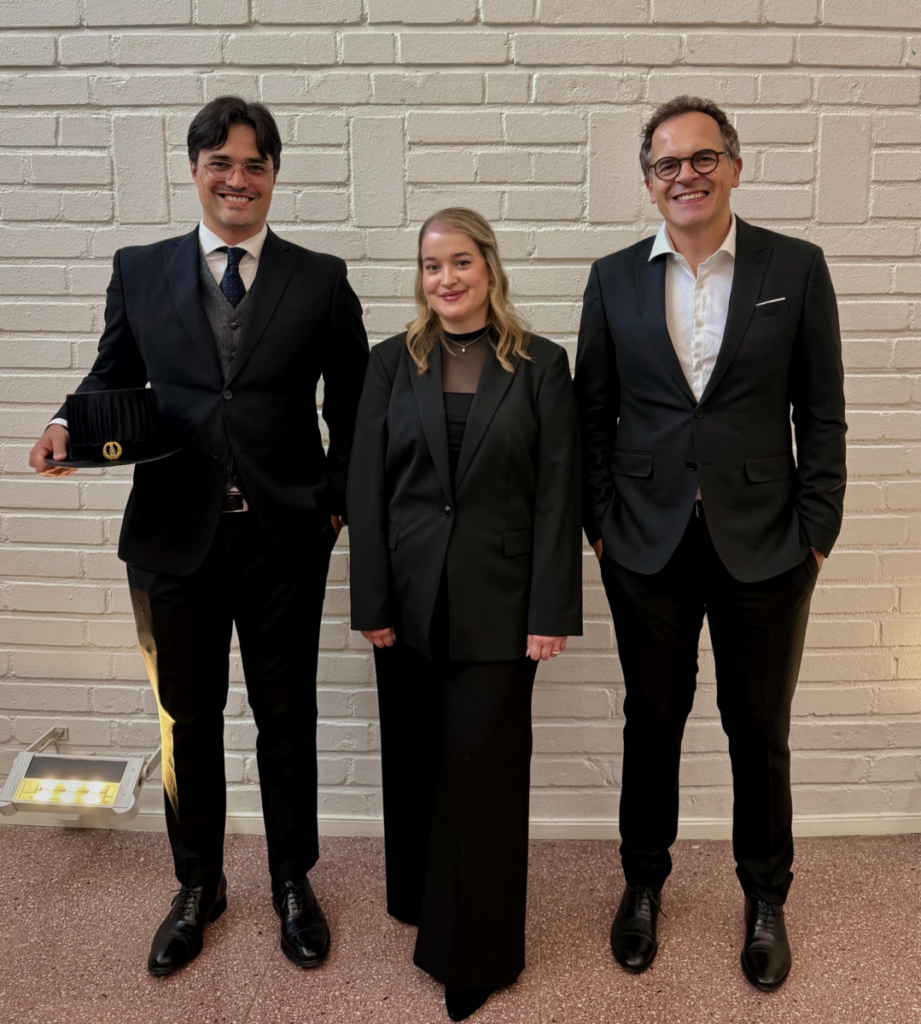
MSc Eleftheria Maranou, from affiliated MIORG group, succesfully defended the dissertation in Immunology titled “The Achilles’ heel of immune checkpoint blockade: Uncovering mechanisms of immune exclusion that drive resistance” at the University of Turku on 21 August 2026.
Opponent: Professor Filipe Pereira, PhD (Lund University, Sweden)
Custos: Docent Carlos Rogerio Figueiredo, PhD (University of Turku)
Summary of the Doctoral Dissertation:
Like every well-designed car, our immune system is equipped with “brakes”, known as immune checkpoint molecules. Some of these brakes are found on immune cells called T cells and help prevent the immune system from causing an accident by overreacting and damaging healthy tissues. Under normal circumstances, they maintain balance, keeping the immune system under control.
When cancer arises, however, these brakes constitute a challenge because T cells need to recognize the threat and press their “gas pedals”, known as immune co-stimulatory molecules. Cancer cells, together with other cells in the tumor microenvironment, know how to switch on red lights that activate these brakes, effectively preventing T cells from reaching and eliminating the tumor.
Immune checkpoint blockade is a form of immunotherapy designed to release these brakes. By preventing cells in the tumor microenvironment from engaging inhibitory signals on T cells, this treatment allows T cells to become activated, move forward, enter tumors, and destroy their targets. Immune checkpoint blockade has transformed the treatment of several cancers, including melanoma. However, many patients either do not respond or develop resistance to this treatment option. Understanding why this happens is one of the major challenges in immuno-oncology research today.
My dissertation investigated why some melanomas successfully evade the immune system and therefore resist immune checkpoint therapy. I focused on two forms of melanoma: uveal melanoma, a rare intraocular cancer that is particularly difficult to treat, and cutaneous melanoma, which develops in the skin.
The first part of my research explored the role of a protein called adipophilin in uveal melanoma. When adipophilin is lost, cells within the tumor stroma undergo changes in the way they use and store energy. These changes create an environment that suppresses immune responses. This effect was particularly evident in tumors lacking BAP1, a tumor suppressor, that associates with aggressive disease. The resulting metabolic reprogramming helps explain why uveal melanoma responds poorly to immunotherapy.
The second part of my research focused on a protein called CD74, which plays an important role in antigen presentation, the process that bridges innate and adaptive immunity. Depletion of CD74 improved the ability of specialized immune cells, called dendritic cells, to activate cytotoxic T cells against melanoma. In addition, CD74-deficient dendritic cells migrated more effectively and presented cancer-associated targets to T cells more efficiently. As a result, anti-tumor immune responses became stronger and immune checkpoint blockade showed improved efficacy.
Together, these studies show that resistance to cancer immunotherapy is not determined solely by cancer cells themselves, but also by metabolic processes taking place within the tumor microenvironment and by the interactions between different immune cells. My research identified adipophilin and CD74 as previously underappreciated regulators of these processes.
The present research improved our understanding of how melanoma escapes immune attack and resists immunotherapy. By identifying factors that suppress immune responses, as well as mechanisms that can strengthen them, this work provides a foundation for the development of new therapeutic strategies. In the future, targeting metabolic reprogramming, CD74, or the pathways it regulates may help enhance effectiveness of immunotherapy and extend its benefits to a greater number of patients. Ultimately, this research contributes to the long-term goal of overcoming treatment resistance and improving outcomes for cancer patients.
Recent Posts
- Researchers discover molecular mechanism that helps aggressive colorectal cancer to spreadResearchers from the University of Turku in Finland, Turku Bioscience Centre and Gustave Roussy Institute Read moreAugust 25, 2026
- The Novo Nordisk Foundation has awarded funding of approximately one million euros to a research project led by Professor Jukka WestermarckThe Novo Nordisk Foundation has awarded funding of approximately one million euros to a research Read moreAugust 21, 2026
- Early-career researchers invited to BioCity Pre-Symposium on 26 August.Doctoral researchers at BioCity Turku are organising a pre-symposium on 26 August 2026, offering early-career Read moreApril 30, 2026
- 35th BioCity Symposium is arranged 27–28 August 2026.This year, BioCity Symposium is arranged on-site in Mauno Koivisto Centre, BioCity in 27–28 August Read moreApril 14, 2026
- Turku Protein Core Opens Two New PositionsTurku Protein Core (TuProtCore) is seeking to fill two roles: a Project Specialist in Service Read moreApril 7, 2026
- The Jane and Aatos Erkko Foundation has granted nearly €1 million to support research led by Professor Jukka Westermarck993 000 € was granted to a research project led by our Group Leader Professor Jukka Read moreApril 2, 2026