
New computational tool helps scientists interpret complex single-cell data
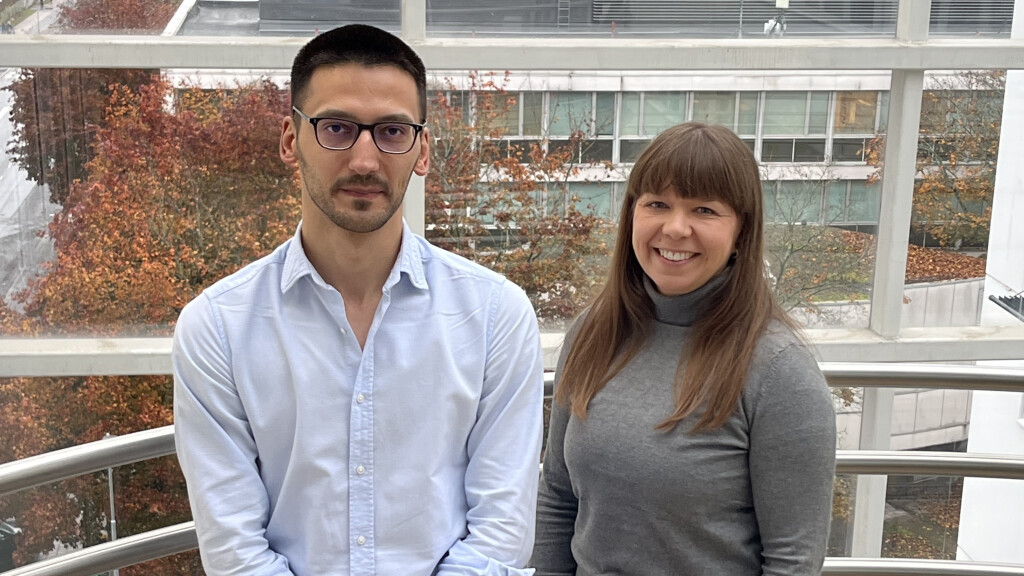
Researchers from Laura Elo’s group, have developed a new computational method to interpret complex single-cell data. The method helps researchers identify and group cell types across samples.
“We were inspired by the process of assembling a puzzle, where one begins by grouping pieces based on low- to high-level features, such as colour and shading, before looking at shape and patterns. Similarly, our algorithm progressively integrates cellular identities through multiple rounds of divisive clustering,” explains Doctoral Researcher António Sousa, the lead developer of Coralysis.
Coralysis has been implemented as an open-source software. At its core, it relies on machine learning, enabling it to build models that can be used to predict cellular identities in new datasets and even estimate how confident the predictions are. This helps researchers avoid the cumbersome and often unreliable task of manually identifying cell types. Another unique feature of Coralysis is its ability to detect changing cellular states that might otherwise be missed.
“Coralysis provides the scientific community with a new way to study cellular diversity and gain a deeper understanding of complex single-cell data. By making it openly available, we hope to support collaboration and accelerate discoveries across the global research community,” says Professor Laura Elo, the principal investigator of the project.
The study by Elo’s research group has been published in the scientific journal Nucleic Acids Research.
Contacts
Antonio Goncalves de Sousa, Doctoral Researcher, antonio.goncalvesdesousa@utu.fi
Sini Junttila, Associate Professor, simaju@utu.fi
Laura Elo, Professor, Principal Investigator, laura.elo@utu.fi
Recent Posts
- Researchers are investigating how snakes lost their limbsSnakes have not always been legless, but have lost their limbs through evolution. Professor Laura Read moreOctober 8, 2026
- Frontiers of Science seminars are starting this weekAutumn 2026 Frontiers of Science seminars start this week. Come for a coffee and sandwich Read moreOctober 5, 2026
- Dissertation Defence: Eleftheria MaranouMSc Eleftheria Maranou, from affiliated MIORG group, succesfully defended the dissertation in Immunology titled “The Achilles’ heel of Read moreSeptember 1, 2026
- Researchers discover molecular mechanism that helps aggressive colorectal cancer to spreadResearchers from the University of Turku in Finland, Turku Bioscience Centre and Gustave Roussy Institute Read moreAugust 25, 2026
- The Novo Nordisk Foundation has awarded funding of approximately one million euros to a research project led by Professor Jukka WestermarckThe Novo Nordisk Foundation has awarded funding of approximately one million euros to a research Read moreAugust 21, 2026
- The Jane and Aatos Erkko Foundation has granted nearly €1 million to support research led by Professor Jukka Westermarck993 000 € was granted to a research project led by our Group Leader Professor Jukka Read moreApril 2, 2026