

Microgravity Research & PIROUETTE 3D Demo
When
Where
Lemminkäisenkatu 12 B, Turku, 20520
Event Details
We would like to invite you to a platform demonstration of Simulated microgravity (sMG) and a discussion on how sMG can enhance your research.
Learning Microgravity and Space in Bioscience research through Litegrav’s PIROUETTE 3D Instrument:
Time & place:
21st October, 13.30-15.00
Koski Room, Visitor and Innovation Centre Joki
Register here: https://luma.com/f826qgl9
Snacks and coffee/tea will be served!
Information about the Demo:
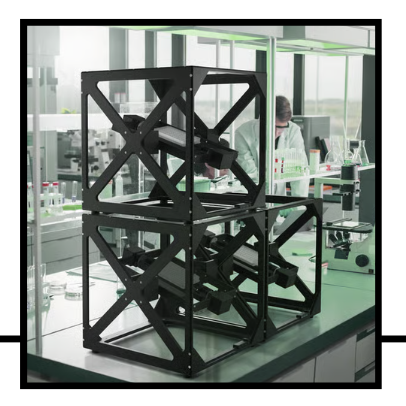
Litegrav is an Estonian-based startup, founded by Dr. Patrik Hollós (BIMA and ÅAU alumni). Their core technology is a 3D microgravity simulator, consisting of a programmable PIROUETTE platform.
Did you know that for decades, bioscience has been actively performed in space, directly contributing to improving human health and the Earth’s environment? We invite you to a platform demonstration of sMG and a discussion on how sMG can enhance your research.
In this demo, we will showcase the PIROUETTE 3D sMG platform, along with discussions around example case studies including stem and cancer cell lines and metabolite production.
Some highlights:
University of Pavia: The platform was used to study two breast carcinoma cell lines, SKBR-3 (HER-2 overexpressing) and MCF-7 (low HER-2-expressing), to induce pathway and morphological changes, demonstrating its use as an efficient tool to fine tune cancer model behaviour.
Boston University: PIROUETTE 3D was used to characterise two first-ever murine alveolar (jaw) osteoblastic cell lines and to isolate their distinct responses to fluid flow shear stress (FFSS) versus 24 hours of sMG. PIROUETTE clearly differentiated the two mechanical modalities: The first cell line responded strongly to fluid shear stress, while the second one responded more to sMG, demonstrating that shear and microgravity engage distinct mechanotransduction pathways, using both as physical cues to develop therapeutically relevant modified cells.
University of Queensland: Using sMG as an efficient tool to enhance secondary metabolite production in microorganisms.